

Business interruption coverage in Texas usually pays only during the “period of restoration,” which in most standard policies starts 72 hours after the physical damage and ends when the property should be repaired with reasonable speed and similar quality, not when it actually is. Insurers use that gap to stop payments early. A business interruption insurance claim lawyer challenges the insurer’s end date with real repair schedules, permit records, policy endorsements, and the insurer’s own delays, and can pursue penalty interest and fees under the Texas Insurance Code when payment runs late.
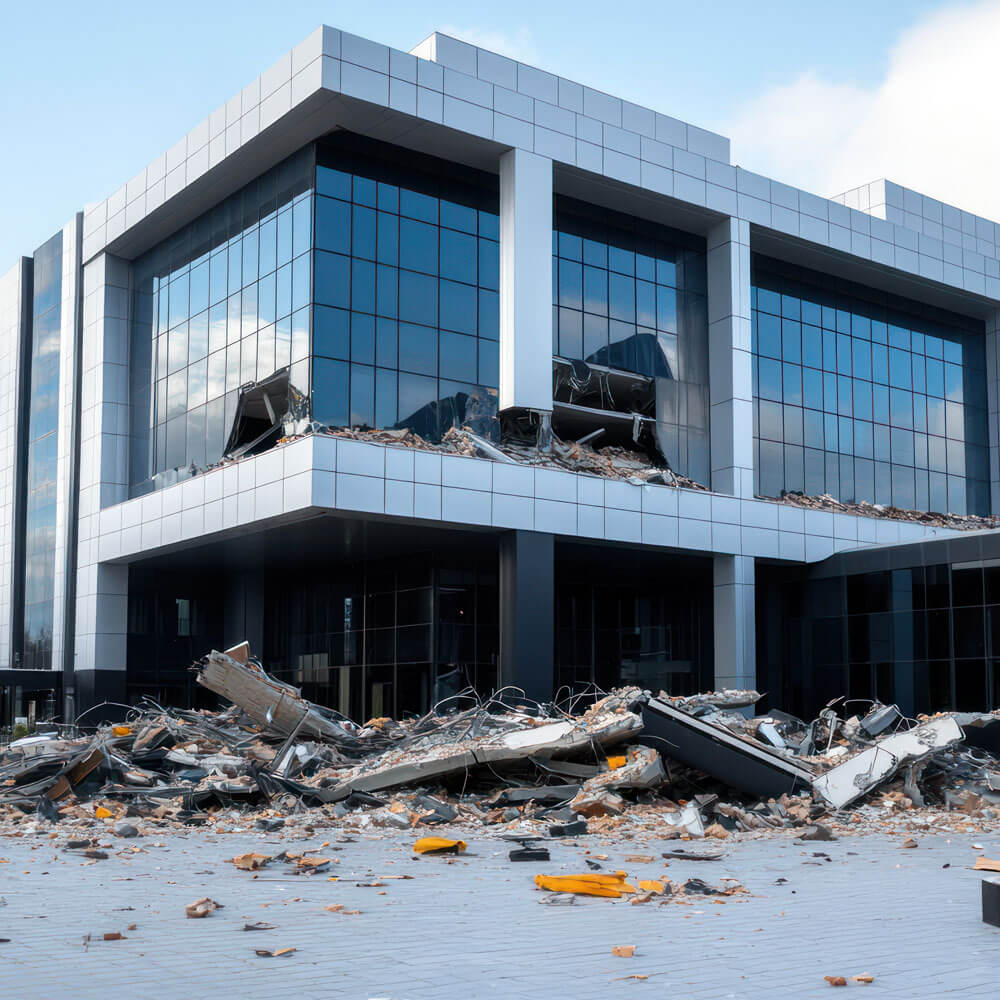
The letter usually arrives while the drywall is still out. Your restaurant, clinic, or warehouse has been closed for weeks, your contractor is waiting on a permit or a back-ordered rooftop unit, and the insurer writes to say business income payments will stop on a date that has nothing to do with when you can reopen. That date came from a consultant’s spreadsheet, not from your building.
At McLaurin Law, we represent Houston businesses in exactly this kind of standoff. Jason C. McLaurin worked inside the insurance industry before he began representing policyholders, and in 2019 he published an overview of business interruption insurance in Corporate Counsel Review that examines how courts measure this very period. Below is how the fight over your end date plays out.
What the Period of Restoration Means in a Texas Business Income Policy
Most commercial property policies sold in Texas use the ISO Business Income (and Extra Expense) form, CP 00 30, or language modeled on it. Under that form, the period of restoration:
- Begins 72 hours after the direct physical loss for lost income (extra expense coverage starts right away)
- Ends on the earlier of the date the property should be repaired, rebuilt, or replaced with reasonable speed and similar quality, or the date you resume business at a new permanent location
- Is not cut short by the expiration date of your policy
That last point means a storm two weeks before renewal does not leave you with two weeks of coverage. As long as the loss happened while the policy was in force, the restoration clock keeps running after the term ends.
The word doing the real work is “should.” Courts have read it to create a theoretical restoration period: the time a hypothetical rebuild would take, rather than the time your rebuild actually takes. Insurers lean hard on that reading. Their building consultant drafts an idealized schedule with no permit holdups, no material shortages, and no competing jobs, and the adjuster ends payments on that schedule’s last day.
Why Houston Rebuilds Rarely Match the Insurer’s Timeline
A schedule drawn up in an office tends to skip the conditions that actually control a Houston repair project:
- Permitting and inspections through the City of Houston, or through Harris County for properties in unincorporated areas
- Contractor and labor demand after a regional storm, when every roofer and electrician in the metro area is booked at once
- Lead times on commercial equipment such as rooftop HVAC units, walk-in coolers, switchgear, and specialized medical or manufacturing machinery
- Landlord approvals and lender sign-offs for leased or financed space
The case for a longer period starts with the conditions that existed while your repairs were underway, not the conditions a consultant assumed.
The Gulf Coast’s own building rules can work against you, too. The standard ISO form excludes from the period of restoration any extra time needed to comply with an ordinance or law that regulates construction or repair. Since September 1, 2018, Houston’s Chapter 19 floodplain rules have required new construction in the 100-year and 500-year floodplains to sit two feet above the 500-year flood elevation, and larger additions and improvements can pull an existing building under that same standard. If your rebuild has to meet those elevation requirements, the extra months may fall outside your covered period entirely, unless your policy carries the Ordinance or Law Increased Period of Restoration endorsement (CP 15 31). Most owners have never checked whether they bought it.
If your adjuster has already circled an end date on your claim, McLaurin Law can test it against your policy language and your contractor’s real schedule before you accept it.
How a Business Interruption Insurance Claim Lawyer Pushes Back on the End Date
The insurer’s consultant can offer an opinion on how long repairs should take. So do you. These are the levers that move the date.
Rebuilding the timeline with documents from your project
We gather contractor bids and schedules, permit applications and city review comments, supplier quotes showing equipment lead times, and correspondence showing when work could realistically begin. A restoration period backed by records from your actual job site is far harder to wave away than one built on assumptions.
Holding the insurer to “similar quality”
Reasonable speed is only half the definition. The property must also be restored to similar quality. A consultant’s schedule that assumes cheaper finishes, smaller equipment, or a stripped-down build-out may be shorter simply because it describes a different building. Showing that gap can add weeks back to the claim.
Counting the delay the insurer caused
Repairs often cannot start until the insurer inspects, approves a scope, or releases an advance. Chapter 542 of the Texas Insurance Code sets deadlines for those steps, including 15 days to acknowledge a claim and begin investigating, and 15 business days to accept or reject it once the insurer has the information it requested. When an insurer misses those deadlines and then argues that your repairs took too long, its own delay becomes part of the dispute.
Finding coverage that runs past reopening
Reopening the doors does not mean revenue snaps back the same week. The current ISO form includes Extended Business Income, which can pay for up to 60 days after the property is repaired while income recovers, and an optional Extended Period of Indemnity can stretch that further. Other policies use a Maximum Period of Indemnity option that caps recovery at 120 days. The options listed on your declarations page matter as much as the definition itself, which is why we read the full policy, not just the claim letter. Our business interruption claims practice starts every review there.
What Texas Law Adds When Payments Stop Too Soon
A wrongful cutoff is not just a matter of unpaid weeks. Under Texas Insurance Code § 542.060, an insurer that is liable for a claim and fails to pay it on time owes statutory interest plus reasonable attorney’s fees. The rate depends on what caused the loss:
- 18 percent a year for most claims, such as an accidental fire or vandalism
- The Texas judgment interest rate plus five percent for weather claims governed by Chapter 542A, such as hail, wind, flood, or hurricane damage
Weather claims also require a written pre-suit notice at least 61 days before filing. Separately, Chapter 541 makes it an unfair settlement practice to refuse to pay a claim without a reasonable investigation, which can come into play when an insurer ends payments based on a schedule no one tested against the facts. If that sounds like your claim, our bad faith insurance team can look at the file.
Before You Accept the Insurer’s End Date
An end date in a letter is the insurer’s position, not a ruling. Send McLaurin Law your policy, the letter cutting off payments, and your contractor’s schedule. We will tell you whether that date holds up and what your business may still be owed. Call (713) 461-6500 or message us through the site.
Frequently Asked Questions About Business Interruption Claims in Texas
How long does business interruption insurance pay in Texas?
Usually for the period of restoration, which in most standard forms starts 72 hours after the physical damage and ends when the property should be repaired with reasonable speed and similar quality, or when you reopen at a new permanent location. Some policies cap that period at a set number of days, and endorsements can add time after reopening. The real answer sits in the definitions and options listed in your specific policy.
Can my insurance company stop business interruption payments before repairs are done?
They can try, and they often do when their consultant estimates a shorter theoretical rebuild. That estimate is an opinion, not a fixed rule. Contractor schedules, permit records, equipment lead times, and evidence of the insurer’s own delays can all support a longer period. If payments stopped while your property is still under repair, have the cutoff reviewed before you sign any release.
Does business interruption insurance cover power outages in Houston?
Standard business income coverage requires direct physical loss or damage at your premises, so losing power because of damage somewhere else on the grid is often not enough by itself. Off-premises power loss is generally covered only if your policy includes a utility services time element endorsement. Hurricane Beryl, which left about 2.26 million CenterPoint customers without power in July 2024, is a good reason to find out which kind of policy you have before the next storm. If your own building also took damage, the analysis changes.
What happens to my business interruption claim if my policy expires during repairs?
Under the standard ISO form, the policy’s expiration date does not cut short the period of restoration. If the physical loss happened while the policy was in force, lost income during the restoration period remains covered after the term ends. Non-standard and manuscript policies can word this differently, so confirm it in your form.
Does the period of restoration include time to meet building codes?
Not under the standard ISO form, which excludes any extra time needed to comply with laws that regulate construction or repair. Your policy may add that time back through an Ordinance or Law Increased Period of Restoration endorsement. For Houston properties affected by the city’s floodplain elevation rules, that endorsement can be the difference between months of covered income and none.
Do I need a lawyer for a business interruption claim in Texas?
Not to file one. But these claims turn on forensic accounting, construction scheduling, and policy definitions, and the insurer will already have its own accountant and building consultant on the file. A business interruption insurance claim lawyer can bring in matching experts, test the insurer’s numbers, and pursue interest and fees under Texas law if payment was delayed without a valid reason.
How long do I have to sue over a business interruption claim in Texas?
Many commercial policies include a suit limitation clause, and under Texas Civil Practice and Remedies Code § 16.070, that contractual period cannot be shorter than two years from the date the claim accrues. Weather-related claims also require the 61-day pre-suit notice under Chapter 542A. Because the deadline in your policy may start running sooner than you expect, check it as soon as payments stop.